
by Christian L. Hovey
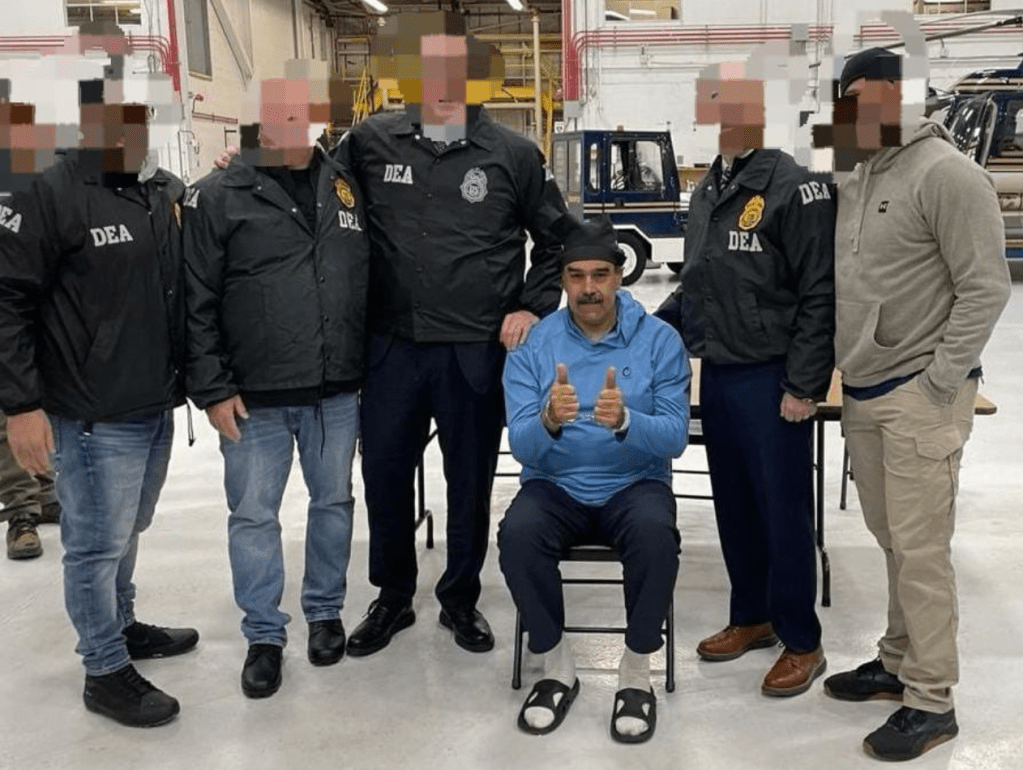
The recent indictment of Nicolás Maduro Moros in the United States District Court for the Southern District of New York presents a complex intersection of domestic criminal law enforcement and fundamental principles of international law. This case, which charges the Venezuelan leader and several co-defendants with narco-terrorism, conspiracy to import cocaine, and weapons offenses spanning over twenty-five years, raises critical questions about the boundaries of extraterritorial jurisdiction, head-of-state immunity, and the prohibition on the use of force in international relations.
THE JURISDICTIONAL FRAMEWORK
The superseding indictment alleges that Maduro and his co-conspirators abused their positions of public trust and corrupted once-legitimate institutions to import tons of cocaine into the United States.[1] The indictment traces Maduro’s alleged involvement from his time as a member of Venezuela’s National Assembly through his tenure as Minister of Foreign Affairs and ultimately as President, characterizing him as the current de facto but illegitimate ruler of Venezuela.[2]
From a purely domestic criminal law perspective, the United States asserts jurisdiction under the protective principle and the effects doctrine, both of which permit a state to prosecute conduct occurring outside its territory when that conduct produces harmful effects within its borders. The indictment explicitly invokes extraterritorial jurisdiction under 18 U.S.C. § 3238, which allows the prosecution of offenses begun and committed outside the jurisdiction of any State or district of the United States.[3]
This jurisdictional claim finds support in established U.S. case law. As the Supreme Court articulated in United States v. Alvarez-Machain, courts have consistently rejected challenges by criminal defendants who claimed they had been unlawfully brought into the court’s custody for trial. The principle is that a defendant’s presence is what matters, not how he got there.[4] This Ker-Frisbie doctrine suggests that even if Maduro’s arrest violated international law, U.S. courts would retain jurisdiction to prosecute him on domestic criminal charges.
THE IMMUNITY QUESTION
The question of head-of-state immunity presents perhaps the most significant international law challenge to the indictment’s validity. Under customary international law, sitting heads of state enjoy absolute immunity from foreign criminal jurisdiction, a principle grounded in both sovereign equality and the functional necessity of permitting state leaders to conduct international relations without fear of foreign prosecution.[5]
The seminal U.S. case of Lafontant v. Aristide established that a head-of-state recognized by the United States government is immune from personal jurisdiction in United States courts unless that immunity has been waived by statute or by the foreign government recognized by the United States.[6] The court in Lafontant emphasized that head-of-state immunity extends to both official and private acts. At the same time, the individual remains in office, and that it extends only to the person the United States government acknowledges as the official head of state.[7]
This recognition requirement becomes dispositive in Maduro’s case. The indictment itself characterizes Maduro as Venezuela’s de facto but illegitimate ruler, noting that more than 50 countries, including the United States, refuse to recognize Maduro Moros as Venezuela’s head of state.[8] The United States has instead recognized Juan Guaidó and, more recently, other opposition figures as Venezuela’s legitimate government. This non-recognition mirrors the Noriega precedent, in which the court held that General Noriega was not entitled to head-of-state immunity because the United States had never officially recognized him as Panama’s head of state.[9]
However, this approach raises fundamental questions about the relationship between political recognition and legal immunity. The principle that immunities attach only to those who are part of, or acting on behalf of, the recognized government of a state creates what one scholar terms a point of enormous significance.[10] When a state exercises effective control over territory and population but lacks international recognition, denying immunity permits precisely what the immunity doctrine was designed to prevent: foreign interference in the governance of a sovereign state through criminal prosecution of its leadership.
THE USE OF FORCE PROBLEM
The most serious international law concerns arise not from the indictment itself, but from the military operation undertaken to effectuate Maduro’s arrest. Article 2(4) of the United Nations Charter prohibits member states from using force against the territorial integrity or political independence of any state, or in any other manner inconsistent with the Purposes of the United Nations.[11] This prohibition is widely recognized as a peremptory norm of customary international law—jus cogens—from which no derogation is permitted.
The use of military force on Venezuelan territory to arrest Maduro appears facially inconsistent with this prohibition. Unlike typical law enforcement operations conducted with host-state consent or under a claim of self-defense against imminent armed attack, the Venezuela operation was characterized by U.S. officials as an arrest of two indicted fugitives of American justice supported by military force.[12]
As Steve Vladeck and Jack Goldsmith note, the legal justification appears to rest on a 1989 Office of Legal Counsel opinion by then-Assistant Attorney General William Barr, which concluded that the President could lawfully order an extraterritorial arrest pursuant to the FBI statutory arrest authority even if it violated customary international law and that as a matter of domestic law, the Executive has the power to authorize actions inconsistent with Article 2(4) of the U.N. Charter.[13] This position claims that domestic constitutional authority can override treaty obligations and customary international law prohibitions on the use of force.
This claim has been subject to sustained scholarly criticism. As Edmundo Vargas Carreño explains, most international legal scholars consider Article 2(4) as a fundamental norm of international law with no exceptions beyond those explicitly provided in the Charter itself—namely, Security Council authorization under Chapter VII and individual or collective self-defense under Article 51.[14] The argument that law enforcement necessity justifies military force against a non-consenting state finds no support in the Charter framework or in generally accepted state practice.
The International Court of Justice has consistently reinforced this interpretation. In the Nicaragua case, the Court held that even support for armed opposition groups within another state violated Article 2(4), emphasizing that the principle of non-intervention involves the right of every sovereign State to conduct its affairs without outside interference.[15] If supporting internal opposition violates the use-of-force prohibition, direct military operations to arrest a sitting government leader would constitute an even more serious breach.
The attempted justification through unit self-defense—the claim that forces executing the arrest warrant could use force to defend themselves—compounds the problem. As Rebecca Ingber has observed, this rationale creates a bootstrapping effect whereby the United States can use force against non-state actors who do not even have the capacity to threaten U.S. territory, in a state that has not attacked the United States, providing the groundwork for a future escalation.[16]
RECOGNITION AND ITS CONSEQUENCES
The Maduro case illuminates a broader tension in international law regarding government recognition. While the United States has not recognized Maduro’s government since 2019, this non-recognition does not alter the legal status of Venezuela as a state or eliminate Maduro’s effective control over Venezuelan territory and institutions. The consequences of linking immunity to recognition, rather than to effective control, are substantial.
As Justin Cole et al. explain, when a government exercises de facto control despite lacking international recognition, denying immunity could have consented to foreign military intervention in Venezuela and creates legal ambiguities that are most troubling when considering the implications for the use of force.[17] If an unrecognized but effective government cannot claim immunity for its officials, and if foreign states may use military force to arrest those officials based solely on domestic criminal charges, the fundamental principles of sovereignty and non-intervention are undermined.
The implications extend beyond Venezuela. A precedent permitting military operations to enforce domestic criminal jurisdiction against unrecognized but effective governments could be invoked by any state with sufficient military capacity against governments it deems illegitimate. This would represent a return to a pre-Charter international order in which the use of force was a permissible instrument of national policy, subject only to the practical constraints of military capability.
CONCLUSION
The Maduro indictment presents legitimate criminal allegations subject to U.S. domestic jurisdiction under established principles of extraterritorial criminal law. However, the method of obtaining custody—through military force on Venezuelan territory—raises fundamental questions about the continued vitality of the Charter prohibition on the use of force and the relationship between political recognition and legal immunity under international law.
U.S. courts may ultimately accept jurisdiction over Maduro based on the Ker-Frisbie doctrine’s focus on present custody rather than the lawfulness of arrest.[18] But this domestic legal conclusion does not resolve the international law violations implicated by the military operation itself. As the International Court of Justice observed in Nicaragua, breach of international law by one state does not justify violation by another, and the principle of territorial integrity is an integral part of the global legal order. It is enshrined in the Charter of the United Nations, Article 2, paragraph 4.[19]
The Maduro case thus exemplifies what Vargas Carreño identifies as the fundamental challenge facing contemporary international law: the tension between the formal equality of states embodied in Charter principles and the effective inequality of states in their capacity to project military force extraterritorially. Whether the international legal system can maintain its foundational prohibitions in the face of powerful states’ assertions of domestic legal authority to override those prohibitions remains an open and troubling question.
[1] United States v. Nicolás Maduro Moros, S4 11 Cr. 205 (AKH) (S.D.N.Y.), at 1.
[2] Id. at 3.
[3] Id. at 22 and 23. 18 U.S.C. § 3238 reads as follows: “The trial of all offenses begun or committed upon the high seas, or elsewhere out of the jurisdiction of any particular State or district, shall be in the district in which the offender, or any one of two or more joint offenders, is arrested or is first brought; but if such offender or offenders are not so arrested or brought into any district, an indictment or information may be filed in the district of the last known residence of the offender or of any one of two or more joint offenders, or if no such residence is known the indictment or information may be filed in the District of Columbia.”
[4] 504 U.S. 655 (1992).
[5] See Arrest Warrant of 11 April 2000 (Dem. Rep. Congo v. Belg.), 2002 I.C.J. 3, ¶ 51 (Feb. 14); Dapo Akande & Sangeeta Shah, Immunities of State Officials, International Crimes, and Foreign Domestic Courts, 21 Eur. J. Int’l L. 815, 818 (2010).
[6] 844 F. Supp. 128, 131–32 (E.D.N.Y. 1994).
[7] Id. at 132 citing Banco Nacional de Cuba v. Sabbatino, 376 U.S. 398, 410, 84 S. Ct. 923, 931, 11 L. Ed. 2d 804 (1964).
[8] Maduro Indictment at 3.
[9] United States v. Noriega, 746 F. Supp. 1506, 1520 (S.D. Fla. 1990).
[10] Justin Cole et al., Recognition Rules, 100 N.Y.U. L. Rev. 785, 810–11 (2025).
[11] U.N. Charter art. 2, para. 4
[12] Charlie Savage & Eric Schmitt, Is It Legal for U.S. to ‘Run’ Venezuela After Maduro’s Capture? Here’s What to Know, N.Y. Times, Jan. 3, 2026.
[13] See Steve Vladeck, Five Questions About the Maduro Arrest Operation, One First (Jan. 3, 2026), https://stevevladeck.substack.com/p/200-five-questions-about-the-maduro (tracing the legal argument to “a deeply controversial 1989 DOJ Office of Legal Counsel memorandum by then-Assistant Attorney General Bill Barr [ . . .] which concluded that the President has inherent constitutional authority to use the FBI for extraterritorial arrests, even in circumstances in which the arrests violate international law”) andBrian Finucane, On the Legality of the Venezuela Invasion, Executive Functions (Jan. 5, 2026), https://www.execfunctions.org/p/on-the-legality-of-the-venezuela.
[14] Edmundo Vargas Carreño, Derecho Internacional Público 154 (2003).
[15] Military and Paramilitary Activities in and Against Nicaragua (Nicar. v. U.S.), 1986 I.C.J. 14, ¶ 242 (June 27).
[16] Rebecca Ingber, Legally Sliding into War, Just Security (Mar. 15, 2026), https://www.justsecurity.org/75306/legally-sliding-into-war/ (observing that unit self-defense doctrine permits escalation without authorization from Congress).
[17] Cole et al., supra, at 807–08.
[18] United States v. Alvarez-Machain, 504 U.S. at 655.
[19] Military and Paramilitary Activities, 1986 I.C.J. at ¶ 268.
 Revista de Derecho Internacional UPR
Deja un comentario