El caso Reference re Secession of Quebec marca un hito en el derecho internacional y en la discusión sobre los territorios autónomos dentro de los Estados. Quebec es una provincia canadiense con particularidades culturales y sociales. Su herencia cultural francesa, especialmente el idioma, contrasta con la tradición anglosajona predominante, en gran parte de Canadá. Esta diferencia histórica y cultural ha alimentado movimientos políticos que buscan la secesión de Quebec, alegando que constituye un pueblo distinto al canadiense. Dicho reclamo dio pie a la consulta que resolvió el Tribunal Supremo de Canadá en 1998.
Aunque la Organización de las Naciones Unidas suele enfocarse en el comportamiento de los Estados en el plano internacional, también reconoce ciertos derechos a entidades distintas, como los “pueblos”. La Carta de las Naciones Unidas establece expresamente el derecho de los pueblos a la autodeterminación.[1] El concepto de “pueblo” no está plenamente definido, pero suele entenderse como un grupo de personas con rasgos culturales, históricos o lingüísticos distintivos dentro de un Estado. Bajo esta noción, Quebec podría considerarse un “pueblo” con derecho a la autodeterminación. Sin embargo, como reconoció el Tribunal, la autodeterminación se manifiesta en dos vertientes: interna y externa.[2]
Autodeterminación externa
La autodeterminación externa implica la separación del Estado madre y la creación de un Estado independiente. Según el Tribunal Supremo de Canadá, este derecho solo surge en circunstancias excepcionales: (1) en situaciones coloniales, (2) bajo ocupación extranjera o (3) cuando un pueblo es completamente privado del ejercicio significativo de la autodeterminación interna.[3] Fuera de estos casos, el derecho internacional no favorece la secesión unilateral de territorios, pues prevalece la regla de la integridad territorial de los Estados.[4]
Autodeterminación interna
Por el contrario, la autodeterminación interna se satisface cuando un pueblo participa activamente en la vida política, goza de oportunidades de desarrollo económico, social y cultural, y no es objeto de discriminación. En estos escenarios, el derecho internacional entiende que el principio de autodeterminación se cumple, aunque no se traduzca en la creación de un nuevo Estado.[5] Además, la garantía de autodeterminación interna refuerza el principio de estabilidad de fronteras y la protección de la integridad territorial de los Estados existentes.[6]
La decisión del Tribunal Supremo de Canadá
El Tribunal canadiense aplicó estos principios al caso concreto y concluyó que Quebec no tiene derecho a declarar unilateralmente su independencia. Razonó que no se daban las circunstancias para activar la autodeterminación externa, pues Quebec no era una colonia ni sufría ocupación extranjera, ni estaba privado de participación política. Al contrario, enfatizó que Quebec cumple con los requisitos de la autodeterminación interna: sus ciudadanos participan activamente en el proceso político canadiense, no enfrentan obstáculos significativos a su desarrollo económico y cultural, y no son víctimas de discriminación.[7] Por tanto, los quebequenses gozan de todos los derechos de los ciudadanos canadienses, además de la libertad de preservar y cultivar su identidad cultural propia.
No obstante, el Tribunal reconoció un elemento democrático relevante: si la población de Quebec expresara, mediante una mayoría clara en una pregunta clara, su deseo de independencia, ello no generaría un derecho automático a la secesión en derecho internacional, pero sí impondría un deber constitucional de negociar al gobierno federal.[8]
Reflexión crítica
El fallo me parece acertado. Numerosos ejemplos contemporáneos, como el caso de Cataluña en España, demuestran la importancia de trazar límites jurídicos claros a los reclamos secesionistas. Permitir que cualquier grupo étnico o cultural declare su independencia unilateralmente socavaría la estabilidad internacional y el principio democrático que sustenta a los Estados. Una secesión unilateral en Cataluña, como en Quebec, afectaría no solo a la región interesada, sino también al resto del Estado, que ha ratificado democráticamente una Constitución vinculante.
Aun así, es comprensible la tensión entre la justicia percibida de que un pueblo decida su destino y la necesidad de preservar la integridad territorial. La mejor salida, como señala la propia decisión, radica en fórmulas de autonomía amplia que permitan a estas regiones preservar su identidad sin poner en riesgo la estabilidad del Estado ni la paz internacional. En definitiva, el Tribunal Supremo de Canadá logró equilibrar estos valores, reafirmando la importancia del principio de integridad territorial y limitando la secesión unilateral a contextos de opresión grave.
[4]Declaración sobre los Principios de Derecho Internacional referentes a las relaciones de amistad y cooperación entre los Estados conforme a la Carta de las Naciones Unidas, AG Res. 2625 (XXV) (24 de octubre de 1970).
[5]Reference re Secession of Quebec, supra nota 2, en el párr. 126.
[6]Pacto Internacional de Derechos Civiles y Políticos, art. 1 (1966); Pacto Internacional de Derechos Económicos, Sociales y Culturales, art. 1 (1966).
[7]Reference re Secession of Quebec, supra nota 2, en los párrs. 135–138.
In the shadowed records of human endeavor, sports arose as primal rites, unbound by borders, ancient Egyptians wrestled in the Nile’s embrace, while Mesoamerican ballgames echoed cosmic myths, our ancestors’ early baseballs and basketballs. Yet, nationalism’s grip tightened in modernity: the 1936 Berlin Olympics, under Hitler’s gaze, paraded Aryan supremacy, transforming athletes into ideological weapons amid swastika-laden spectacles. In Ireland, Gaelic games like hurling resisted British rule, symbols of cultural defiance woven into the fabric of independence struggles. Fascist Italy under Mussolini harnessed soccer and the Giro d’Italia to forge national unity, while Cold War rivalries pitted American individualism against Soviet collectivism in hockey’s «Miracle on Ice» or basketball showdowns. Chess, too, mirrored this: in Francoist Spain, prodigy Arturo Pomar became «Arturito,» a nationalist icon manipulated by media to embody regime resilience; likewise, American prodigy Bobby Fisher became the USA’s rockstar in Cold War politics, challenging Soviet dominance in chess championships to assert ideological superiority over the East. These vignettes reveal sports not as mere play, but as lyrical battles where bodies enact the soul’s territorial yearnings, provoking us to question: when did competition cease being human and become hegemonic, or state-oriented, or Nationalistic?
Beneath the veneer of global harmony, sports governance dances in a twilight of law, entities like the International Olympic Committee (IOC), founded in 1894 by Pierre de Coubertin and Demetrios Vikelas in Paris to revive the ancient Olympic Games, impose rules that echo international public law’s principles yet evade its strictures, those rigorous protocols and obligations that state-centric treaties impose. The Court of Arbitration for Sport (CAS), established in 1984 by the IOC to provide swift and specialized resolution for sports disputes, operates as a supranational tribunal akin to the International Court of Justice (ICJ) but more agile and focused on athletic matters.
Then there are the multiple sport federations, such as the Fédération Internationale de Football Association (FIFA), founded on 21 May 1904 in Paris to oversee international soccer competitions, or the Fédération Internationale des Échecs (FIDE), established on 20 July 1924 during the Paris Olympic Games, whose statutes govern soccer’s and chess’s billions, intersecting with human rights through anti-discrimination clauses. FIDE has standardized chess’s arcane laws: from en passant to rating systems capped at 400-point differentials (recently reformed for elites), ensuring fair play across 200 member federations. Yet, FIDE’s structure, much like FIFA’s or other national sport federations, with national affiliates electing leaders, perpetuates nationalism. Other bodies, like World Athletics or FIBA for basketball, enforce doping protocols under the World Anti-Doping Agency (WADA), which was founded in 1999 as an independent international agency to combat doping in sports, blending autonomy with UN-inspired norms.
Provocatively, these frameworks, while stabilizing chaos, chain sports to sovereign echoes; imagine if they dissolved national silos, birthing rules for fluid, borderless rivalries—would equity flourish, or anarchy reign?
Puerto Rico, ensnared in colonial limbo as a U.S. commonwealth, carves autonomy in the arena: since 1952, its Olympic Committee fields teams under a distinct flag. Basketball icons like José Juan Barea or boxers like Félix Trinidad embody this hybrid vigor, competing in Pan American Games while navigating U.S. citizenship’s paradoxes. In Chess, Puerto Rico has sent Olympic Teams to compete in the Chess Olympiads since 1956 and has been doing so ever since.
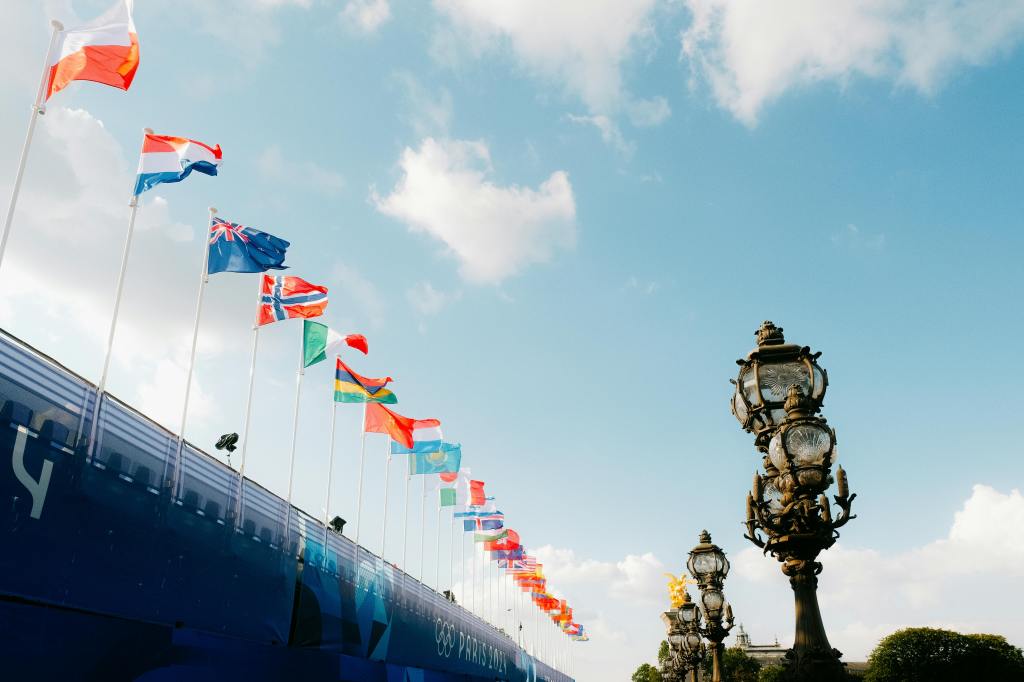
Global stages like the Olympics or FIFA World Cup orchestrate nationalism’s symphony: anthems swell as victories proxy territorial triumphs, from Brazil’s futbol artistry asserting post-colonial pride to chess Olympiads where nations field teams. Yet, diplomacy lurks, ping-pong thawed Sino-American frost. In basketball’s FIBA World Cup or athletics’ Diamond League, migration blurs lines: naturalized players shift allegiances, eroding purity. Provocatively, de-nationalize these: envision chess as pure mind duels, sans flags, or soccer as club epics, would glory dim, or humanity ascend?
Amid globalization’s torrent, sports throb with nationalist fervor; anthem kneelings ignite debates. Surveys across nations link high sport nationalism to aggression, as in Armenian chess pride fueling cultural bonds. In this fractured now, international law intervenes haltingly—bans on Russia post-Ukraine echo boycotts, urging a pivot from division to shared humanity.
Dream of a borderless odyssey: de-nationalized sports, where athlete naturalization evolves into fluid identities, clubs supplant states, and competitions honor merit over maps. A path to this horizon might unfold in deliberate stages, guided by international public law’s evolving tapestry. First, reform the charters of bodies like the IOC, amending statutes to loosen nationality requirements. FIFA, for instance, has already tweaked player eligibility rules amid controversies over rapid nationalizations, allowing dual-citizenship athletes to switch allegiances with fewer barriers, a step toward recognizing migration’s reality.
Building on this, introduce pilot programs for hybrid events: FIFA could expand its Club World Cup into a premier global league, eclipsing national qualifiers with merit-based entries, while the IOC experiments with «global nomad» categories in the Olympics, permitting diaspora collectives or regional alliances to compete without sovereign ties. Gradually, phase out symbols of division: mute national anthems in favor of universal odes, replace flags with emblems of shared humanity, and leverage technology. FIFA, with its vast reach, could pioneer this by mandating diversity quotas in national teams, accelerating denationalization through ethnic and migratory inclusivity, and transforming squads into microcosms of global flux. Thoughtfully, this liberation quells nationalism’s poison, birthing unity in a world scarred by borders; yet, provoke the shadow: without nations’ fire, does sport’s essence fade, dissolving into commodified spectacle where passion yields to profit, or ignite purer flames, reclaiming the primal joy of striving unbound, where victory echoes not echoes of empire but the universal heartbeat of endeavor? And deeper still: in this void, might new divisions arise: corporate hegemonies or algorithmic elites, replacing old chains with subtler ones, or could it herald true equity, where every athlete’s story melts into a collective epic, free from the weight of flags?
Few words in the political lexicon are as explosive as “traitor.” The epithet carries moral, cultural, and historical weight far beyond ordinary criticism. Yet in law, “traitor” is not a rhetorical flourish but a technical category: treason. In the United States, treason is the only crime defined in the Constitution, and the Framers deliberately confined it to a narrow set of circumstances in order to avoid the abuses of English law.[^1] Internationally, treason has no universal definition, while comparative jurisdictions construct analogous crimes around the protection of the constitutional order, often with differing emphases on violence, foreign allegiance, or institutional stability.
This article addresses the question “Is Donald J. Trump a traitor?” within three legal frameworks: the U.S. Constitution and federal statutes; comparative law in peer democracies; and international law. The analysis concludes that although Trump’s conduct related to the January 6, 2021 assault on the Capitol and the broader attempt to overturn the 2020 election may plausibly implicate serious offenses such as insurrection or seditious conspiracy, it does not satisfy the stringent definition of treason in American law. Comparative law indicates that similar conduct might be treated as “high treason” or “rebellion” elsewhere. International law, however, provides no general crime of treason, underscoring the concept’s fundamentally domestic nature.
I. The Constitutional Definition of Treason in the United States
Article III, Section 3 of the Constitution provides: “Treason against the United States, shall consist only in levying War against them, or in adhering to their Enemies, giving them Aid and Comfort. No Person shall be convicted of Treason unless on the Testimony of two Witnesses to the same overt Act, or on Confession in open Court.”[^2] The Framers deliberately limited the scope of treason. As James Madison explained in The Federalist No. 43, the restrictive definition was designed “to guard against the danger of subjecting the citizens to arbitrary prosecutions” of the kind common in English history.[^3]
Congress codified this definition without alteration in 18 U.S.C. § 2381, which provides that “[w]hoever, owing allegiance to the United States, levies war against them or adheres to their enemies, giving them aid and comfort within the United States or elsewhere, is guilty of treason.”[^4] The statute prescribes penalties up to death, imprisonment for at least five years, and disqualification from office.
Judicial interpretation has kept treason narrow. In Ex parte Bollman, Chief Justice John Marshall explained that “levying war” requires “an assemblage of persons for the purpose of effecting by force a treasonable purpose.” Mere conspiracy is insufficient.[^5] The Second World War produced the most sustained modern case law. In Cramer v. United States, the Court held that the overt act requirement “is not satisfied by proof of an act which is innocent on its face, and which becomes incriminating only when shown by other evidence to have been performed with a treasonable intent.”[^6] In Haupt v. United States, the Court clarified that intent may be established circumstantially even if the overt act itself is not overtly treasonous.[^7] Finally, in Kawakita v. United States, the Court defined “enemies” as the armed forces of a power with which the United States is in a state of open war.[^8]
The combined effect of these precedents is that treason is limited to two scenarios: active participation in warlike force against the United States, or aid to a wartime enemy. Neither prong is easily satisfied.
II. Insurrection, Seditious Conspiracy, and Related Offenses
Because of treason’s narrow scope, prosecutors have rarely used it. Instead, they rely on neighboring offenses in Chapter 115 of Title 18. Section 2383 criminalizes inciting, assisting, or engaging in “rebellion or insurrection against the authority of the United States,” and provides for imprisonment and disqualification from office.[^9] Section 2384 defines seditious conspiracy as an agreement “to overthrow, put down, or to destroy by force the Government of the United States, or by force to prevent, hinder, or delay the execution of any law.”[^10]
These provisions were central to prosecutions connected to the January 6 attack. Leaders of groups such as the Oath Keepers and Proud Boys were convicted of seditious conspiracy and sentenced to lengthy prison terms.[^11] Juries found that defendants coordinated the use of force to obstruct certification of the electoral vote. These cases underscore the government’s reliance on § 2384 rather than the constitutional treason clause.
The distinction is revealing: American law recognizes violent resistance to government authority as criminal, but reserves the label “treason” for wartime collusion or organized war against the state itself.
III. Comparative Perspectives on Treason and Rebellion
Other democracies define treason differently.
In the United Kingdom, the Treason Act of 1351 remains in force, defining treason as including compassing the death of the sovereign or “levying war against the King in his realm.”[^12] Yet prosecutions for treason have been virtually nonexistent in the modern era. Parliament recently modernized its national security framework in the National Security Act 2023, which created offenses of foreign interference and espionage, signaling that treason in its medieval form has been eclipsed by statutes more fit for contemporary threats.[^13]
Germany distinguishes Hochverrat (high treason) under sections 81–83 of the Strafgesetzbuch. High treason occurs when an individual undertakes, by force or threat of force, to undermine the existence of the Federal Republic or alter its constitutional order.[^14] Unlike the U.S. Constitution, German law does not require a wartime “enemy.”
France criminalizes crimes against the “fundamental interests of the nation,” which include conduct traditionally described as trahison when committed in collaboration with a foreign power.[^15] Spain has long recognized rebelión and sedición as offenses targeting violent uprisings against the constitutional order. In 2022, Spain repealed sedition but retained rebellion, defined as a violent and public uprising intended to prevent enforcement of the Constitution.[^16]
Across these jurisdictions, the common thread is that the gravest offense involves the use of force to subvert constitutional order, not necessarily adherence to a wartime enemy.
IV. Treason and International Criminal Law
International criminal law does not recognize treason as a universal crime. The Rome Statute of the International Criminal Court enumerates genocide, crimes against humanity, war crimes, and the crime of aggression.[^17] The crime of aggression, codified in Article 8 bis, addresses the planning or execution of unlawful armed force by one state against another, not domestic betrayal.[^18]
The omission of treason from the Rome Statute reflects the domestic character of the offense. It also aligns with human rights instruments such as the International Covenant on Civil and Political Rights, which caution against overly broad definitions of treason that might criminalize dissent.[^19]
V. Applying U.S. Law to Trump
Does Trump’s conduct satisfy the constitutional definition of treason? On the “enemies” prong, the answer is no. The Supreme Court has made clear that “enemies” means foreign belligerents in wartime.[^20] Domestic opponents or rioters do not qualify.
On the “levying war” prong, the threshold is high. While Trump’s rhetoric and actions may have contributed to the violent attack on the Capitol, courts have held that “levying war” requires an organized, warlike effort against the government. Even a large-scale riot may not suffice absent proof of a military-style campaign.[^21] Moreover, the Constitution requires testimony of two witnesses to the same overt act by Trump himself, a burden unlikely to be met.[^22]
Thus, while his conduct may fall within insurrection or seditious conspiracy statutes, it does not constitute treason under Article III.
VI. Comparative Application
If the same facts arose in Germany, prosecutors could argue that Trump engaged in Hochverrat by attempting through force to alter the constitutional order.[^23] In Spain, his direction of a violent uprising to prevent enforcement of the Constitution could amount to rebelión.[^24] In France, his conduct might implicate crimes against the fundamental interests of the nation. In the United Kingdom, modern national security statutes would likely apply rather than the ancient Treason Act.
Comparative law thus suggests that other democracies would more readily classify the conduct as treason or rebellion.
VII. Constitutional Disqualification and
Trump v. Anderson
Beyond criminal liability, Section 3 of the Fourteenth Amendment bars any person who has engaged in insurrection after taking an oath of office from holding federal office. In Trump v. Anderson, the Supreme Court held that states lack authority to enforce Section 3 against presidential candidates; only Congress may do so.[^25] The Court left unresolved the factual question of whether Trump engaged in insurrection.
This distinction highlights the multiplicity of legal frameworks: treason, insurrection, seditious conspiracy, and constitutional disqualification each serve distinct functions.
VIII. Conclusion
The constitutional definition of treason, designed to avoid political abuse, is narrow. Trump’s conduct does not fit that definition, though it may implicate insurrectionary or conspiratorial statutes. Other democracies would likely treat similar acts as high treason or rebellion. International law, by contrast, offers no general crime of treason.
The question “Is Trump a traitor?” must therefore be answered with precision: legally, under the U.S. Constitution, no. Politically, the epithet may resonate. But law requires fidelity to constitutional text and precedent, which limit treason to wartime betrayal or organized war against the state.
Citations
[^1]: THE FEDERALIST NO. 43, at 302 (James Madison) (Clinton Rossiter ed., 1961).
[^2]: U.S. CONST. art. III, § 3, cl. 1.
[^3]: THE FEDERALIST NO. 43, supra note 1, at 302.
[^4]: 18 U.S.C. § 2381 (2018).
[^5]: Ex parte Bollman, 8 U.S. (4 Cranch) 75, 126 (1807).
[^6]: Cramer v. United States, 325 U.S. 1, 29 (1945).
[^7]: Haupt v. United States, 330 U.S. 631, 641–42 (1947).
[^8]: Kawakita v. United States, 343 U.S. 717, 735–36 (1952).
[^9]: 18 U.S.C. § 2383 (2018).
[^10]: 18 U.S.C. § 2384 (2018).
[^11]: See, e.g., Press Release, U.S. Dep’t of Justice, Leader of Oath Keepers Sentenced for Seditious Conspiracy (May 25, 2023).
[^12]: Treason Act 1351, 25 Edw. 3 St. 5 c. 2 (Eng.).



 Revista de Derecho Internacional UPR