
By Carlos R. Feliciano Morales, MPP
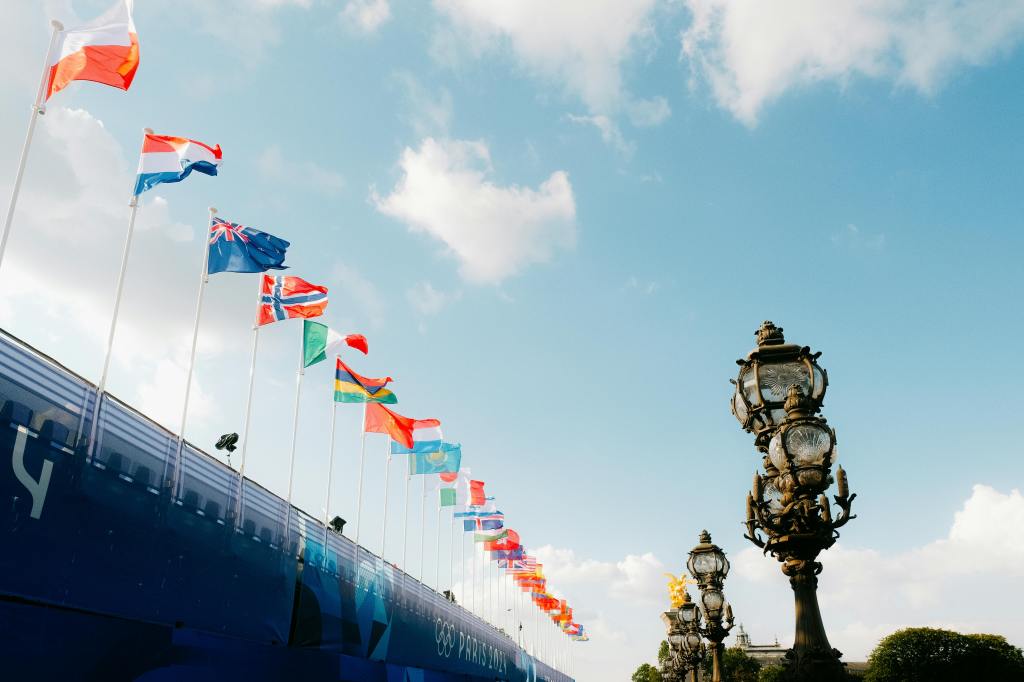
In the shadowed records of human endeavor, sports arose as primal rites, unbound by borders, ancient Egyptians wrestled in the Nile’s embrace, while Mesoamerican ballgames echoed cosmic myths, our ancestors’ early baseballs and basketballs. Yet, nationalism’s grip tightened in modernity: the 1936 Berlin Olympics, under Hitler’s gaze, paraded Aryan supremacy, transforming athletes into ideological weapons amid swastika-laden spectacles. In Ireland, Gaelic games like hurling resisted British rule, symbols of cultural defiance woven into the fabric of independence struggles. Fascist Italy under Mussolini harnessed soccer and the Giro d’Italia to forge national unity, while Cold War rivalries pitted American individualism against Soviet collectivism in hockey’s «Miracle on Ice» or basketball showdowns. Chess, too, mirrored this: in Francoist Spain, prodigy Arturo Pomar became «Arturito,» a nationalist icon manipulated by media to embody regime resilience; likewise, American prodigy Bobby Fisher became the USA’s rockstar in Cold War politics, challenging Soviet dominance in chess championships to assert ideological superiority over the East. These vignettes reveal sports not as mere play, but as lyrical battles where bodies enact the soul’s territorial yearnings, provoking us to question: when did competition cease being human and become hegemonic, or state-oriented, or Nationalistic?
Beneath the veneer of global harmony, sports governance dances in a twilight of law, entities like the International Olympic Committee (IOC), founded in 1894 by Pierre de Coubertin and Demetrios Vikelas in Paris to revive the ancient Olympic Games, impose rules that echo international public law’s principles yet evade its strictures, those rigorous protocols and obligations that state-centric treaties impose. The Court of Arbitration for Sport (CAS), established in 1984 by the IOC to provide swift and specialized resolution for sports disputes, operates as a supranational tribunal akin to the International Court of Justice (ICJ) but more agile and focused on athletic matters.
Then there are the multiple sport federations, such as the Fédération Internationale de Football Association (FIFA), founded on 21 May 1904 in Paris to oversee international soccer competitions, or the Fédération Internationale des Échecs (FIDE), established on 20 July 1924 during the Paris Olympic Games, whose statutes govern soccer’s and chess’s billions, intersecting with human rights through anti-discrimination clauses. FIDE has standardized chess’s arcane laws: from en passant to rating systems capped at 400-point differentials (recently reformed for elites), ensuring fair play across 200 member federations. Yet, FIDE’s structure, much like FIFA’s or other national sport federations, with national affiliates electing leaders, perpetuates nationalism. Other bodies, like World Athletics or FIBA for basketball, enforce doping protocols under the World Anti-Doping Agency (WADA), which was founded in 1999 as an independent international agency to combat doping in sports, blending autonomy with UN-inspired norms.
Provocatively, these frameworks, while stabilizing chaos, chain sports to sovereign echoes; imagine if they dissolved national silos, birthing rules for fluid, borderless rivalries—would equity flourish, or anarchy reign?
Puerto Rico, ensnared in colonial limbo as a U.S. commonwealth, carves autonomy in the arena: since 1952, its Olympic Committee fields teams under a distinct flag. Basketball icons like José Juan Barea or boxers like Félix Trinidad embody this hybrid vigor, competing in Pan American Games while navigating U.S. citizenship’s paradoxes. In Chess, Puerto Rico has sent Olympic Teams to compete in the Chess Olympiads since 1956 and has been doing so ever since.
Global stages like the Olympics or FIFA World Cup orchestrate nationalism’s symphony: anthems swell as victories proxy territorial triumphs, from Brazil’s futbol artistry asserting post-colonial pride to chess Olympiads where nations field teams. Yet, diplomacy lurks, ping-pong thawed Sino-American frost. In basketball’s FIBA World Cup or athletics’ Diamond League, migration blurs lines: naturalized players shift allegiances, eroding purity. Provocatively, de-nationalize these: envision chess as pure mind duels, sans flags, or soccer as club epics, would glory dim, or humanity ascend?
Amid globalization’s torrent, sports throb with nationalist fervor; anthem kneelings ignite debates. Surveys across nations link high sport nationalism to aggression, as in Armenian chess pride fueling cultural bonds. In this fractured now, international law intervenes haltingly—bans on Russia post-Ukraine echo boycotts, urging a pivot from division to shared humanity.
Dream of a borderless odyssey: de-nationalized sports, where athlete naturalization evolves into fluid identities, clubs supplant states, and competitions honor merit over maps. A path to this horizon might unfold in deliberate stages, guided by international public law’s evolving tapestry. First, reform the charters of bodies like the IOC, amending statutes to loosen nationality requirements. FIFA, for instance, has already tweaked player eligibility rules amid controversies over rapid nationalizations, allowing dual-citizenship athletes to switch allegiances with fewer barriers, a step toward recognizing migration’s reality.
Building on this, introduce pilot programs for hybrid events: FIFA could expand its Club World Cup into a premier global league, eclipsing national qualifiers with merit-based entries, while the IOC experiments with «global nomad» categories in the Olympics, permitting diaspora collectives or regional alliances to compete without sovereign ties. Gradually, phase out symbols of division: mute national anthems in favor of universal odes, replace flags with emblems of shared humanity, and leverage technology. FIFA, with its vast reach, could pioneer this by mandating diversity quotas in national teams, accelerating denationalization through ethnic and migratory inclusivity, and transforming squads into microcosms of global flux. Thoughtfully, this liberation quells nationalism’s poison, birthing unity in a world scarred by borders; yet, provoke the shadow: without nations’ fire, does sport’s essence fade, dissolving into commodified spectacle where passion yields to profit, or ignite purer flames, reclaiming the primal joy of striving unbound, where victory echoes not echoes of empire but the universal heartbeat of endeavor? And deeper still: in this void, might new divisions arise: corporate hegemonies or algorithmic elites, replacing old chains with subtler ones, or could it herald true equity, where every athlete’s story melts into a collective epic, free from the weight of flags?

 Revista de Derecho Internacional UPR
Replica a Madeline Morales Cancelar la respuesta